
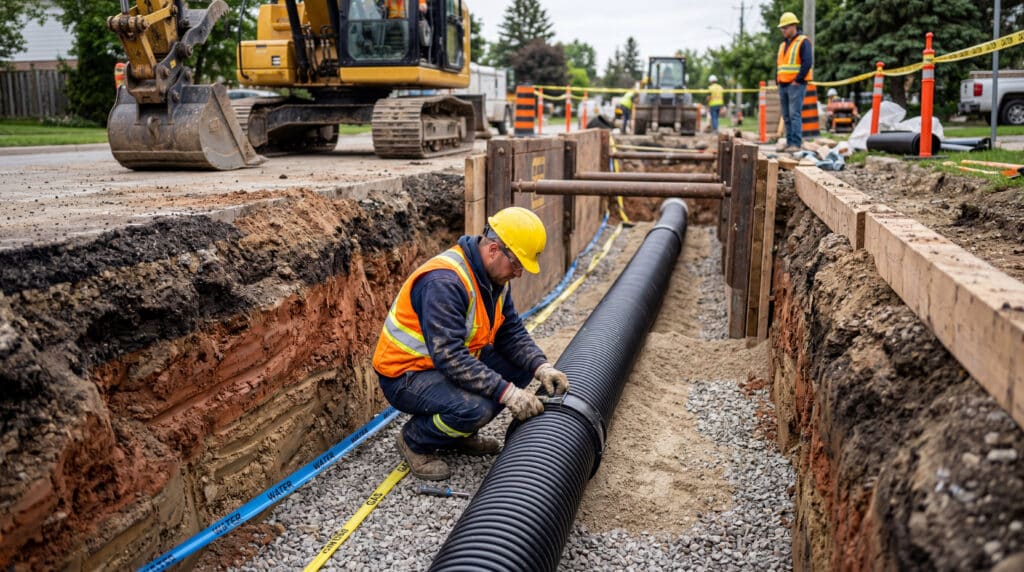

Capital investment is accelerating across the utility industry. Delivery capacity isn’t. Utilities and municipalities are renewing aging infrastructure, absorbing new demand, hardening systems against severe weather, and meeting regulatory commitments — all at once, and mostly with the same engineering, construction, and project management resources they already have.
The pattern repeats across capital programs: projects run consistently over budget — some utility leaders put the number at 30% or more — and the organization finds out only when the project closes. The overrun finally hits the books, sometimes two years after the work began, and by then there’s nothing left to correct. No way to trace where the drift started. No chance to act while it was still happening.
That’s not a discipline problem. It’s a visibility problem.
The project manager as human integration layer
 Most utilities don’t lack systems. Project information lives in the ERP, the GIS, project tools, contractor systems, field applications, spreadsheets, and email — each holding part of the picture. Collecting data was never the hard part. Connecting those systems, teams, and workflows into one current view of delivery is.
When the systems don’t connect, people do the connecting. Project managers spend their days coordinating schedules, chasing status, reconciling numbers across teams, and assembling leadership reports — instead of managing delivery. They become the human integration layer, and human integration doesn’t scale to the volume of construction now underway.
Ask the people around them and the diagnosis comes back in different words: the tools weren’t built for this. Traditional project tools sit apart from the work itself. Planning and scheduling happen in one system while engineering, permitting, materials, construction, and field execution happen somewhere else. They were designed for a different era of capital delivery — before this volume of projects, before this pace, before regulators and customers expected answers in real time.
Where projects break down
Utility project delivery breaks down at the handoffs: planning to field execution, GIS to project teams, owners to contractors, materials to assets, construction to operations. Every seam is a place where context gets lost, information gets re-entered, and cost drift begins — quietly, invisibly, until closeout.
The result is a paradox: utilities have more project data than ever, and one trusted, current view of cost, schedule, progress, and risk still takes manual effort to assemble. By the time the report is built, it describes last month.
When planning and execution share one record
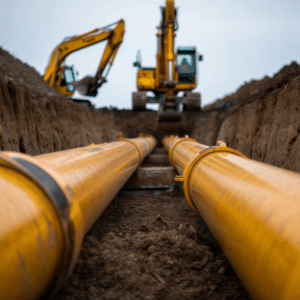 Picture the alternative: contractors and employees work on the same real-time system. Approved project plans, milestones, and scope translate directly into governed work packages for crews. Field progress, quantities, materials, issues, and changes flow into current cost and schedule forecasts as they happen — so leaders see variance while there’s still time to act, not when it hits the financial books.
That’s what KloudGin Construction Project Portfolio Management does. It extends KloudGin Construction Work Management with the portfolio, program, and project governance layer on the same Single Face of Work® platform, so planning and execution share one record from first estimate to operational asset. It covers the full utility project portfolio — customer-driven work, capital and program investments, and asset-driven projects — because whatever triggers the work, the delivery lifecycle is the same: initiate, plan and design, schedule and prepare, execute, close and handover.
And because it connects to the operational side of the platform, the handoff that usually loses the most — construction to operations — becomes a continuation instead of a cliff. Validated as-builts, inspections, tests, warranties, and asset data carry directly into operations. Utilities using Construction Work Management have improved field crew productivity by up to 45% and accelerated financial reconciliation by 40%, because the data doesn’t have to be rebuilt at every handoff.
The question worth asking
The capital programs in front of this industry are among the largest in a generation. They won’t be delivered by adding more spreadsheets, more status calls, or more heroic project managers stitching systems together by hand.
The question for every utility leader planning next year’s capital program is simple: when a project starts to drift, how long before anyone knows? If the honest answer is “at closeout,” planning and execution have never lived in the same place. Put them there, and the overrun stops being a surprise discovered after the fact — and becomes a signal acted on in time.