







- What is KloudGin?KloudGin is the utility industry's only cloud-native, mobile-first platform that unifies Construction Work Management (CWM), Enterprise Asset Management (EAM), and Field Service Management (FSM) in a single system called the Single Face of Work®. Purpose-built for utilities and public sector organizations, KloudGin eliminates the system silos that drain 20-30% of workforce productivity by 20–30%. Customers include DTE Energy, Arizona Public Service, Veolia, El Paso Electric, ENSTAR Natural Gas, DC Water, Louisville Water, and California Water Service.
- What does "Single Face of Work®" mean?
Single Face of Work® means one platform, one mobile app, one data model, and one source of truth across Construction, Asset, and Field Service Management. Field crews access asset history, work orders, customer information, GIS context, parts inventory, and safety procedures through a single interface instead of cycling through multiple applications. Engineering specifications flow directly from construction to maintenance, and customer service requests connect to the same asset data crews use in the field.
- What business value does KloudGin deliver?KloudGin delivers measurable financial and operational improvements by eliminating system fragmentation that reduces utility workforce productivity by 20–30%. Customers report +21% productivity gains, 26% faster resolution times, 20–25% improvement in first-time fix rates, over 91% customer satisfaction, and 30 minutes per worker per day recaptured, equivalent to two additional work weeks per worker annually. A mid-sized water utility eliminated $3.2 million in annual inefficiencies, and California Water Service achieved 98% operational efficiency during wildfire response.
- How quickly can a utility see value from KloudGin?KloudGin delivers measurable value in weeks, compared to the 18 or more months typical of legacy platform implementation. Our phased approach begins with a high-impact area, such as field service or asset maintenance, and produces results before expanding to other domains. One customer went live in 14 weeks versus 18 months for a comparable legacy implementation. KloudGin’s multi-tenant architecture removes delays caused by customization, with typical migration cost recovery within 18–24 months.
- How does KloudGin reduce the total cost of ownership?KloudGin reduces total cost of ownership by eliminating the four key cost drivers found in legacy systems: expensive customization, fragile point-to-point integrations, forced version migrations, and end-of-life risk. Every customer runs the same multi-tenant version with pre-built integrations to SAP, Esri, IBM, Oracle, CIS, ERP, OMS, ADMS, and DERMS, removing version drift, re-implementation cost, and sunset risk. Purpose-built platforms deliver 35–40% reductions in system maintenance costs compared to general enterprise alternatives.
- What is KloudGin Field Service Management (FSM)?KloudGin FSM is a cloud-native, mobile-first workforce platform that connects every work group, work type, and asset through a single field interface. Capabilities include work order creation and assignment, intelligent scheduling, route optimization, embedded Esri GIS, AI-supported knowledge base, supply chain integration, customer engagement, and prebuilt analytics. Recent additions include Dispatch Center 3.0 and Assisted Scheduling. IDC named KloudGin a Leader in the Worldwide Field Service Management Solutions for Utilities assessment in 2026.
- What capabilities distinguish KloudGin FSM?KloudGin FSM was built by utility experts for real-world field operations, not adapted from general-purpose enterprise systems. Capabilities that set it apart include true offline mobile functionality for crews operating in low-connectivity environments; an embedded Esri GIS work and job order interface; AIQ Atlas for voice-driven work order completion and hands-free troubleshooting; LENS for visual asset identification in the field; Dispatch Center 3.0 for teams managing large crews across complex territories; Assisted Scheduling; and real-time customer engagement. The structural differentiator is native unification with EAM and CWM: field crews, asset data, and construction workflows share one data model rather than passing information across disconnected systems.
- What is KloudGin’s AssetIQ (AIQ) AI agent family?AssetIQ (AIQ) is KloudGin's family of AI agents built for utility workflows. AIQ Atlas is the AI-powered field copilot, enabling voice-driven work order completion, hands-free troubleshooting, instant access to technical documentation, R3 (Record-Review-Report) mode for voice documentation, and LENS for visual asset identification. AIQ Apollo supports administrators and power users with plain-language UI configuration and prompt-driven workflow automation. Together, the AIQ family transforms KloudGin from a system of record into a system of work.
- What makes KloudGin unique?KloudGin stands out for three structural reasons. First, utility-only focus: every innovation, integration, and support decision is dedicated to utility and public sector operations. Second, native unification: KloudGin is the only platform that natively unifies CWM, EAM, and FSM, and is independently validated by IDC as the only vendor recognized as a Leader in both AI-Enabled EAM for Utilities and FSM for Utilities. Third, architecture: cloud-native, multi-tenant, and mobile-first, with every customer always on the current version and no sunset risk.
- How does KloudGin integrate with existing utility systems?KloudGin's integration library includes pre-built adapters for SAP (ECC, S/4HANA, S/4HANA Utilities -- adapter available on the SAP Store), Oracle, Esri ArcGIS (both Utility Network and Geometric Network), CIS, ERP, SCADA, ADMS, DERMS, OMS, AMI, IoT, and more. These are out-of-the-box integrations, not custom builds. Integration projects that previously required 6-12 months can now be completed in weeks.
- Will KloudGin require us to replace existing systems?No. KloudGin does not require a rip-and-replace approach. Your CIS, ERP, GIS, SCADA, and ADMS remain the systems of record for their respective domains. KloudGin extends and integrates with those systems, enhancing their value where work actually occurs. Customers use KloudGin alongside SAP, Oracle, Esri, and various CIS and ERP systems, with each system performing its core function while KloudGin connects them into a Single Face of Work® for field crews, dispatchers, and customer service teams.
- Can utilities configure KloudGin without coding?Yes. Through AIQ Apollo, administrators and power users configure UIs, workflows, and forms using plain language -- no coding required. Customer-built forms link directly to KloudGin surveys and integrate into workflows. Because configurations are applied to the multi-tenant platform, they don't fork a customer's environment into a custom version stranded on an old release.
- Is KloudGin reliable during storms and emergencies?Yes. Emergency response is a proven area of strength for KloudGin. The Emergency Response Coordination solution provides workflows for mutual aid, mass-deployment scheduling, real-time situational awareness, and unified visibility across crews, contractors, and partner utilities. Customers report 40% faster emergency response times, 99.98% platform uptime during major storm events, and 70% fewer documentation errors during high-pressure situations.
- How does KloudGin manage work across employees, contractors, and mutual aid resources?KloudGin coordinates internal crews, contractors, and mutual aid resources on a single platform, giving dispatchers unified visibility into every available resource regardless of employment type. Skills-based dispatch matches the right crew to the right work order based on qualifications, location, and availability in real time. Contractors access the same mobile interface as internal crews, with appropriate permissions, so work order status, asset data, and documentation requirements are consistent across the entire workforce. During mutual aid events, the emergency response solution supports mass-deployment scheduling, real-time situational awareness, and partner utility coordination -- with a complete record of all work performed regardless of who performed it.
- How does KloudGin support utility regulatory compliance?KloudGin embeds regulatory compliance directly into field workflows rather than treating it as a separate reporting layer. Safety procedures, inspection checklists, and compliance requirements are built into every work order so field crews capture accurate data at the point of execution. The platform is designed to support the workflows and documentation requirements underlying regulations such as PHMSA gas pipeline safety; EPA Safe Drinking Water Act and PFAS water quality mandates; NERC reliability and vegetation management standards; FERC Order No. 2222 DER aggregation requirements including battery storage and EV charging infrastructure; and MS4/NPDES stormwater and permitting obligations. Real-time dashboards and automated reporting provide immediate visibility into compliance status with full audit trail documentation across electric, gas, water, and public sector operations. Because every customer runs the same current platform version, compliance capabilities are continuously updated without requiring customers to manage upgrades or re-implementations.
- How does KloudGin handle data migration from legacy systems?KloudGin's migration approach achieves 99.97% data migration validation accuracy, even for more than 30 years of asset history. Pre-built integration adapters connect to SAP, Oracle, Esri, CIS, and other systems of record, turning what would be a one-time migration into ongoing live integration. The multi-tenant architecture also removes version-specific migration complexity common in legacy upgrades. Typical migration cost recovery is 18-24 months.
- How does KloudGin support field safety?Safety is integrated into the workflow rather than added as a compliance layer. HSE capabilities include risk management, compliance management, and safety procedures embedded directly into work orders. AIQ Atlas provides hands-free, voice-driven access to safety procedures and asset histories at the worksite, so technicians don't need to stop work to retrieve information. Customers have achieved a 70% reduction in documentation errors during emergencies, when safety risk is highest.
Our Solutions
KloudGin Work Management
A mobile-first work enablement platform that empowers the workforce and delivers significant productivity and efficiency gains.
Elevate every aspect of your field service operations with a complete, real-time view of your assets and workforce
- Streamline scheduling, dispatch, and completion processes with the power of AI-native insights – ensuring both efficient and effective service delivery.
- Empower your teams with instant access to historical records, manuals, work notes, media, and expert guidance, giving even new or inexperienced employees the confidence to deliver quality service.
- Simplify subcontractor collaboration, accelerating onboarding and providing everyone with the tools they need to excel.
- Enhance customer satisfaction with real-time service updates and self-service options provided via intuitive customer portals, keeping customers informed and engaged throughout the process.
Recognized as a Gartner and IDC Market Leader for Work and Asset Management for Utilities

Connect, equip and amplify your mobile workforce
KloudGin Work Management is designed to elevate your operations and maximize workforce efficiency. Provide your mobile field teams with the tools and information they need to excel, while elevating the delivery of your field service to the next level of perormance and quality.
Complete Mobile Workforce Empowerment
AI-Native Decision Support
Agile & Flexible
Unified Scheduling Engine
End-to-End, Composable Workflows
Modern User Experience
Future-Proofed & Adaptable
Best-in-Class Customer Support
Proven results
Reduced service call resolution times
+
0
%
Improved technician utilization
+
0
%
Improved workforce productivity
+
0
%
First-time fix rate
+
0
%
Reduced maintenance costs
+
0
%
Empower your teams, improve your operations, elevate your customer experience
- Best-in-Class Workforce Management
- An Intuitive User Experience
- Simplified, Efficient Onboarding
- AI-Native Reporting and Analytics
- Enhanced Safety & Compliance
Best-in-Class Workforce Management
Designed for today’s modern workforce with fast innovation cycles and a ‘worker first’ imperative, KloudGin delivers an unparalleled mobile experience and simplified training for high system utilization. Simplify and automate workflows, from job prioritization and scheduling to real-time monitoring and adjustment, with an AI-native scheduling engine that dynamically adapts to changing conditions. Effectively monitor and manage all scheduled work in real-time, with rapid plan schedules to allow schedulers to quickly adjust to last-minute, urgent or emergent requests.
An Intuitive User Experience
Designed with the mobile user in mind, with an intuitive interface, speech recognition, image capture and comparison, and GIS interactivity to simplify onboarding, reduce training time, and empower seasoned professionals and new hires to excel in their roles.
Simplified, Efficient Onboarding
Quickly onboard and support third party contractors and new employees. High quality data capture and centralized operational data, supported by AI-embedded co-pilots, equips non-experts with an expert perspective into their operations.
The end-to-end digitization of work orders and on-field activities has been designed to be easy for users to adopt and utilize, helping contractors and new hires get up to speed and easily update, edit, annotate and modify records in the field as needed.
AI-Native Reporting and Analytics
Improve insight into your business processes with our business intelligence reporting and dashboard platform, equipped with machine learning capabilities and a cloud based data warehouse. Detailed reports, built-in analytics and an easily configurable dashboard help you quickly track important metrics. Easily identify issues and patterns from volumes of operational data using embedded AI.
Enhanced Safety & Compliance
Ensure implementation and adherence to safety regulations and support effective compliance reporting with digital safety forms, continuous data capture, and end-to-end reports on a single platform. Simplify audit trails, reporting and other regulatory compliance requirements with full integration within your existing workflows.
Explore our utility and public sector specialized solutions
Best-in-Class Workforce Management
Best-in-Class Workforce Management
Simplify and automate workflows, from job prioritization and scheduling to real-time monitoring and adjustment, with an AI-powered scheduling engine that dynamically adapts to changing conditions. Effectively monitor and manage all scheduled work in real-time, with rapid plan schedules to allow schedulers to quickly adjust to last-minute, urgent or emergent requests.
An Intuitive User Experience
An Intuitive User Experience
Designed with the mobile user in mind, with an intuitive interface, speech recognition, image capture and comparison, and GIS interactivity to simplify onboarding, reduce training time, and empower seasoned professionals and new hires to excel in their roles.
Simplified, Efficient Onboarding
Simplified, Efficient Onboarding
Quickly onboard and support third party contractors and new employees. High quality data capture and centralized operational data, supported by AI-embedded co-pilots, equips non-experts with an expert perspective into their operations.
AI-Native Reporting and Analytics
AI-Native Reporting and Analytics
Improve insight into your business processes with our business intelligence reporting and dashboard platform, equipped with machine learning capabilities and a cloud based data warehouse. Detailed reports, built-in analytics and an easily configurable dashboard help you quickly track important metrics. Easily identify issues and patterns from volumes of operational data using embedded AI.
Enhanced Safety & Compliance
Enhanced Safety & Compliance
Ensure implementation and adherence to safety regulations and support effective compliance reporting with digital safety forms, continuous data capture, and end-to-end reports on a single platform. Simplify audit trails, reporting and other regulatory compliance requirements with full integration within your existing workflows.
Improved Customer Satisfaction
Improved Customer Satisfaction
Improve customer service and engagement with a user-friendly digital customer portal. Reduce inquiries, streamline communication, and build trust.
Industry Expertise
Explore our utility-specialized solutions

AssetIQ

AssetIQ Atlas

Enterprise Asset Management

Mobile Workforce Management

Construction Work Management

As Built

Emergency Response and Damage Assessment

Backflow Prevention and Cross Connection Control

Beyond the Meter Revenue Models

Connected Contractor

Connected Customer
Customer Service Lead Line ID

811: Call Before You Dig

Vegetation Management

Hydrant Inspection & Flushing

Leak & Discharge Monitoring

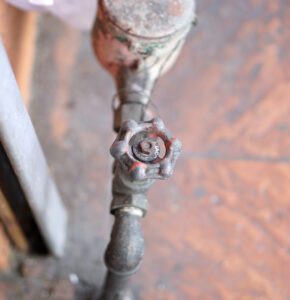
Valve Tracing
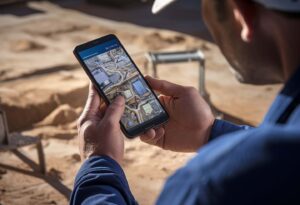
Esri GIS Integration
No posts found
Success Stories
Learn more about our customers
The City of Pasadena Selects KloudGin to Modernize Utility Asset and Construction Work Management Across Water and Electric Infrastructure
From Fragmented Systems to Unified Excellence: The City of Waco’s Municipal Transformation Success
National Fuel Gas: Delivering Utility Operations Excellence with Best-in-Class Work and Asset Management
Transforming Field Work Management at Arizona Public Service with KloudGin’s Mobile-First, Cloud-Native Solution
No posts found
Specialized utility & essential services solutions
Utility-grade security
KloudGin understands that the security of your utility operations is paramount, and we’ve built our software platform with utility-grade security as a core principle. We leverage a robust cloud infrastructure with multiple layers of protection to ensure that your data remains confidential, available, and protected against unauthorized access.
With KloudGin, you can be confident that your operations are supported by a platform designed with the highest standards of safety and security in mind.
FAQs
What is field service management?
Field Service Management (FSM) is the organization and optimization of employees and tasks that occur “in the field” or away from your organization’s headquarters. Many types of companies implement FSM practices, from services to manufacturing, installation and utility services. Field Service Management is growing as many industries provide mission critical services in the field.
What are some common field service activities?
One of the exciting yet challenging aspects of successful Field Service Management is that every company and industry has unique needs and specifications when defining FSM, so it is important to have a highly flexible platform.
Traditional field services that have led to the creation of modern FSM solutions were carried out by utility, HVAC, water, and telecommunication industry professionals. These industries have historically dispatched technicians or other staff members to remote locations, such as businesses and residences. Work would either be completed at these locations, meters would be read, or tasks would be accomplished remotely.
Many of these duties involve accurate asset and equipment tracking and maintenance. Much of field service is customer-facing, and since work is performed remotely, mobile workforce management is a keystone of FSM.
What are some common field service management issues?
Meeting Customer Expectations: Customers have high expectations for service today. Utility customers expect service without disruption, and customers getting services done at their homes want to know when and what to expect from onsite workers. Fast, efficient solutions are required.
Inefficient Manual Dispatch: Manually dispatching field workers causes inherent inefficiencies and is time-consuming. Errors and underutilized employees and assets often occur.
Sales Generation: Services are a vital driver of sales. FSM can help improve customer satisfaction and increase sales of related services.
Employee Management: Managers struggle to monitor and communicate with field employees
Safety: The safety of mobile employees at remote sites or on the road is vital.
Outdated Data and Analytics Technology: Antiquated data collection methods and underutilized or nonexistent analytics decrease efficiency and inhibit potential growth.
High Costs: Fluctuating fuel, raw materials, equipment, and other costs can be difficult and expensive to monitor and minimize.
Unused or Underutilized Assets: Even when not used, industrial equipment is expensive to maintain. Many companies don’t even have a record of their complete asset inventory.
Unpredictability: Juggling customer service, mobile workforce management, and operation optimization is a considerable challenge and makes standardization difficult.
What is field service management software?
Pen and paper data collection and record-keeping was once the best method for monitoring and optimizing field services. However, with the increased demand for field services across industries, managers and decision-makers seek more modern solutions. Even with digital technology, data becomes siloed and difficult or impossible to access and utilize without the correct technology.
Field Service Management software incorporates artificial intelligence and machine learning technology to remove data silos and integrate data into a single platform that can automate and optimize field service tasks across the entire workforce, regardless of proximity to company headquarters. FSM software connects employees and managers to vital, up-to-date information and data. A mobile workforce optimized through an integrated FSM solution increases overall efficiency and customer service, leading to improved practices and business growth.
With smartphones, tablets, and laptops, mobile workforce management is easier to implement than ever before. When technicians have instant access to data through their mobile devices, field services are improved through instant access to company data like service history, customer information, and real-time updates—leading to increased customer loyalty, satisfaction, and sales.
AI-enabled technology can automate route scheduling, optimization, and technician selection based on customer needs. This can make dispatch instantaneous upon work order submission and ensures that the closest and most qualified professional is connected to the correct customer. Increased dispatch efficiency and route optimization save labor, time, and money and are invaluable perks of FSM software.
What are some must-haves when considering field service management software?
Field Service Management software should be cloud-based and tailored to integrate with your existing systems. FSM software must be accessible at any time and location for real-time data updates.
For example, KloudGin’s Field Service Suite enables mobile scheduling and management of all work streams. It incorporates work orders, resources, vehicles, communications, customers, and collaboration into a single configurable business process.
Leveraging automation and machine learning, KloudGin’s Field Service Suite optimizes field service jobs’ prioritization, scheduling, routing, and completion.
Does my business need field service management or mobile workforce management software?
While advanced field service management solutions like KloudGin’s Field Service Suite combine mobile workforce management capability into field service management software, not every business involved in field services may benefit from this technology. Some smaller companies would be better suited for an independent mobile workforce management or basic scheduling solution. These solutions focus on employee-management relations and communication; primarily basic scheduling and productivity.
Field Service Management combines mobile workforce management’s improved communication abilities with optimizing billing, work order instructions, manuals and capturing real time field data, along with asset and equipment management, maintenance, and visibility, ensuring quick repairs or procurement whenever necessary. FSM software helps coordinate better deployment and management of your field workers and equipment.
Our valued partners


KloudGin Frequently Asked Questions
Building the utilities and public sector of the future, together
Snohomish County PUD
“The experience working with KloudGin on this development has been very collaborative, and has resulted in an extremely stable and supportable SAP integration solution that has the flexibility and options to tailor a customer’s needs.”
Brianne Ramsey
Senior Applications Analyst
City of Waco
“As a city, you would like to think that everything works smoothly, but in reality we were a bunch of silos working independently. One of the things KloudGin has brought forth is that we need to have more interconnectivity and to be able to look at each other’s information. Our project grew – when we started off, it was going to be a utilities project, maybe streets. Since then, almost every type of field operating department within the city will be on KloudGin.”
Lisa Tyer
Director of Customer Engagement
Arizona Public Service
“All I heard was how much KloudGin really caters to their customers, and that’s what helped us to make our decision – it’s what we kept hearing from every customer that we talked to.”
Mike Ribordy
Operations Supervisor
IDC
“KloudGin’s focus on eliminating the technology burden that forces field crews to navigate multiple disconnected systems highlights how mobile-first, cloud-native platforms enhance workforce productivity. By enabling utilities to coordinate all work types, work groups, and asset classes through unified cloud-based interfaces, the approach illustrates how modern mobile-native SaaS architectures unlock operational agility required to meet evolving customer expectations while building resilient infrastructure foundations.”
John Villali
Senior Research Director
IDC
“KloudGin’s integrated EAM and FSM platform demonstrates how cloud-native, multi-tenant SaaS architectures can transform utility operations by addressing the fundamental disconnect between asset management and field service operations. Building from their position as a Leader in the IDC MarketScape for Worldwide Field Service Management Solutions for the utilities industry, the company’s ability to unify long-cycle asset maintenance with short-cycle customer service activities through mobile-first design reflects the technological evolution necessary for modern utility workforce management.”
John Villali
Senior Research Director
Madison Gas and Electric
“KloudGin has been really adaptable, so we’ve been able to have a single source of truth for our inspection data. We’ve been able to streamline our process workflows, improve visibility and collaboration, and better serve both our teams and our customers. They’ve been really helpful through all of our implementations. We are excited to continue to build on this foundation and support a more connected and responsive utility.”
Jane Rossing
Manager, Operations Support
Louisville Water Company
“The indicator of success for us is not that my project is successful […] when you hear your end users say, you finally selected something that is of value to us, that means more to me than anything.”
Obe Everett
Director of PMO and Business Systems Support