
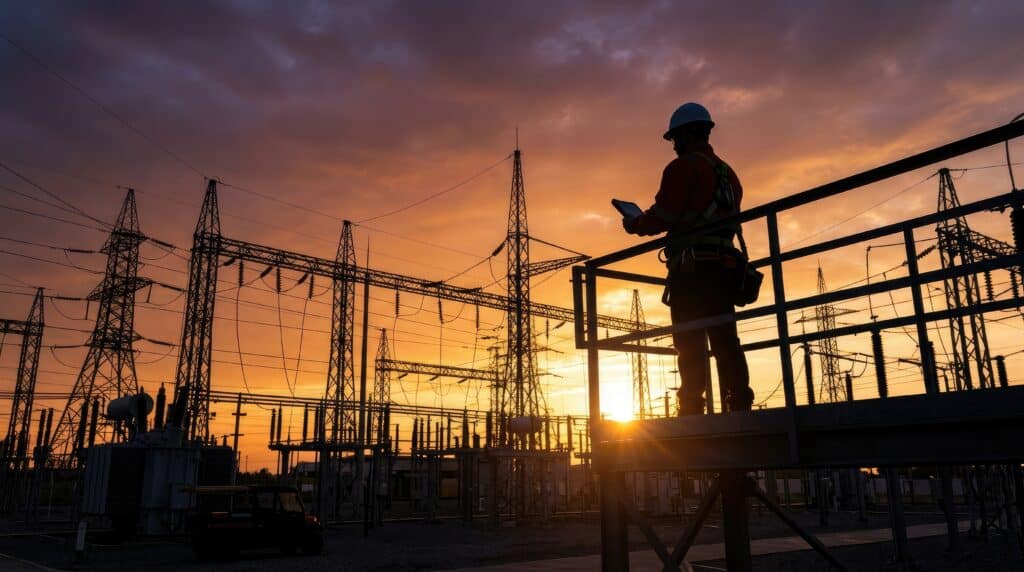

Every utility has safety on the wall: days since the last incident. Safety moments to open every meeting. Stand-downs, tailboards, job hazard analysis. The commitment is real, and the people behind it are sincere.
But safety doesn’t live only in training programs and posters. It lives in the systems people use to do the work. And right now, the systems are getting more dangerous even as the training gets better — because of who is leaving, who is arriving, and what stands between them.
The transfer that isn’t happening
On any given day, a field crew is protected by the formal procedures and by something less formal: the accumulated judgment of the people on the truck. The veteran knows this stretch of main was patched in the nineties and behaves differently under pressure. He knows which access point floods, and what happens when this particular job is rushed. That judgment was earned over decades of doing the same work in the same territory — and this year, nearly a third of the utility workforce becomes eligible to retire, with 40% eligible within five years.
The person replacing that veteran is capable and willing. What they don’t have is the context, and too often the systems don’t give it to them. Asset history sits in one application, past inspections in another, the capital project that installed the asset in a third, the as-builts still redlined on paper in a truck, the GIS layer showing a pole that was replaced eighteen months ago — and the near-miss from two years ago in a filing cabinet, or in nobody’s records at all. When the knowledge lived in the crew, fragmented systems were survivable. When the crew is new, fragmented systems mean people walk onto job sites missing information the organization technically possesses.
That’s the safety story hiding inside the workforce transition. New workers aren’t careless. They’re uninformed by design — asked to rebuild, job by job, a picture their predecessors carried in their heads.
Hazards on the screen, before the work begins
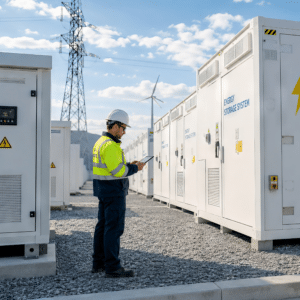 When construction, asset, and field service information share a single operational record, a technician opens a work order and the asset’s full history opens with it — maintenance records, inspection results, known conditions, what the last crew found and noted. The hazard no longer depends on a veteran’s memory. It’s on the screen, in the field, before anyone picks up a tool.
Capturing that record stops being a chore after the job. With KloudGin AIQ Atlas, a crew can note conditions by voice while the work is happening — this valve is seizing, this pole is leaning, this access is compromised — and the note becomes part of the permanent record the next crew inherits. Nothing has to survive the drive back to the yard to get written down.
And because everyone works from the same system, the state of the job is current for everyone. Dispatch knows who is where. Supervisors see what the field sees. A change in one place is a change everywhere, which matters most in exactly the moments when conditions are changing fast.
The return that comes first
Safety incidents are often described as the cost of an aging infrastructure or a green workforce. More often they are the cost of an information gap — something known somewhere in the organization that wasn’t present at the point of work. Close the gap and the same investment pays out three ways at once: fewer surprises in the field, faster onboarding for the workforce arriving now, and institutional knowledge that stops retiring when its holders do.
Utilities measure their operational systems on productivity, cost, and reliability, and they should. But the first return on a system that puts the right information in front of the right worker at the right moment is that people go home whole. The younger workforce will run this industry’s field operations for decades to come. The utilities that keep them safe will be the ones whose systems tell them what the veterans always knew.