


KloudGin CEO Vikram Takru on why utility safety is a shared responsibility that reaches from the crew to the community, and to the vendors who build what crews rely on.
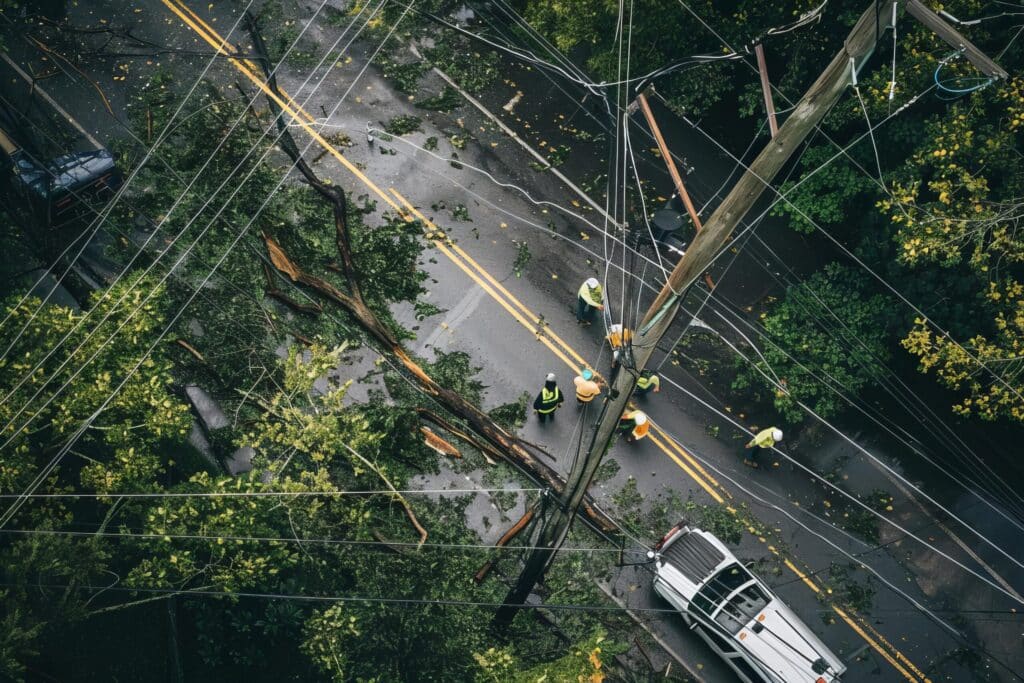
Every utility I know takes safety seriously, because safety is inseparable from the service it delivers. What separates the utilities I admire most is how far they go to turn that commitment into a discipline practiced until it is reflex. The real test comes in the places nobody is watching: a trench at the end of a long shift, a pole in the rain, a gas main under a street that was supposed to be isolated. Safety isn’t a department inside a utility. It’s the whole point of the utility.
I’ve been reflecting on this since last month, when a few members of our team spent four days at a tier 1 electric and gas utility’s safety week event. Crews from both sides of the business rotated through hands-on stations and demonstrations, practicing the hardest parts of the job. Our team was there alongside them, and what they brought back wasn’t a list of feature requests. It was a set of observations about how seriously a utility can take the work of keeping people safe, and about where a company like ours fits into that.
What a safety week is really for
It’s easy to read a safety week as a compliance exercise, a box checked once a year. That’s not what our team witnessed. What they saw was a utility deliberately stopping the work for a few days so the people who do it could practice the hardest parts of it together, across gas and electric, across crews that don’t normally share a yard. The value wasn’t in any one demonstration. It was in a few thousand people carrying the same habits back to their trucks and the field.
Here’s the thing about those habits: they don’t live only with the workers. They live in the procedures the crew follows, the records they check before they open a vault, the maps they trust when they locate a line, and the dispatch that tells them which job is next and what is waiting for them when they arrive. Every one of those things was designed by someone, and in today’s utility, that increasingly includes the technology partners the utility works with.
Why vendors belong in the room
For decades, the relationship between a utility and its technology vendors has been transactional. The utility writes requirements, the vendor delivers software, and the two meet again at renewal. Safety was the utility’s job. The vendor’s job was uptime.
I don’t think that division holds anymore, if it ever did. When a crew member in the field is working from a user interface, the people who built that user interface are part of the safety chain whether they acknowledge it or not. A confusing work order, an outdated asset record, a procedure buried three taps deep: each of those is a decision someone made in an office, and each of them lands on a person in a bucket truck or a trench.
So when this gas and electric utility invited us to their safety week event, we saw it as a chance to live up to that responsibility in person: to stand next to the people who use what we build, watch how they work when the stakes are highest, and bring that back into how we design. Thank you to their team for opening that door to us. Not every utility would include its vendors in a week like that, and the fact they did says a great deal about how they see safety: not as something the utility does alone, but as something everyone around the work has to own together. That’s the kind of partnership I believe the industry needs more of.
Safety is bigger than the crew
Worker safety is where every safety conversation rightly starts. But it isn’t where it ends. The services our customers deliver are the ones a community can’t function without. Water that is safe to drink. Gas that stays in the pipe. Power that comes back after the storm, in the order that keeps hospitals and water treatment plants running first.
When those services fail, the consequences aren’t a mere inconvenience. A boil-water notice closes schools and restaurants. A gas leak evacuates a neighborhood. An extended outage in a heat wave or a cold snap puts the elderly and the medically dependent at real risk. Businesses lose days they can’t get back. The economy of a town runs on the reliability of three things most people never think about until one of them stops.
That’s the citizen side of safety, and it’s why the work a crew does on a Tuesday morning matters far beyond the crew. A utility that protects its workers protects its customers, because the same discipline, the same accurate information, and the same careful sequencing of work produce both outcomes. You can’t have one without the other.
What we take from it
What will stay with our team from the safety week event is a sharper sense of obligation. The people we serve are not utility executives, in the end. They are the crews, and behind the crews, the communities those crews keep running. Everything we build should be measured against whether it makes that work safer and more certain, and whether it holds up at 2 AM in the rain.
Safety goes well beyond a single week. It’s the standard every day, for utilities and for everyone who works alongside them. I’m grateful that this utility asked KloudGin to be part of theirs, and we’ll carry what our team learned there into everything we build.

About the Author
Vikram Takru serves as Chief Executive Officer of KloudGin, where he leads the company’s strategic direction and growth initiatives. A seasoned technology executive with over two decades of industry experience, Vikram has established himself as a visionary in field service and asset management solutions.
Under his leadership, KloudGin has developed the utility industry’s only cloud-native, mobile-first combined field service and asset management platform. This innovative solution eliminates operational silos and delivers critical information to field crews when and where they need it most.
Before founding KloudGin, Vikram successfully built and led Frontline Consulting Services (FCS), scaling the company to 500+ employees and more than $40 million in revenue in under four years, culminating in a successful acquisition by TEKSystems. Earlier in his career, he held the position of Senior Director of R&D at Oracle.
Vikram’s deep industry knowledge and commitment to technological innovation continue to drive KloudGin’s mission to transform field operations and asset management for utilities through connected, cloud-based solutions.