
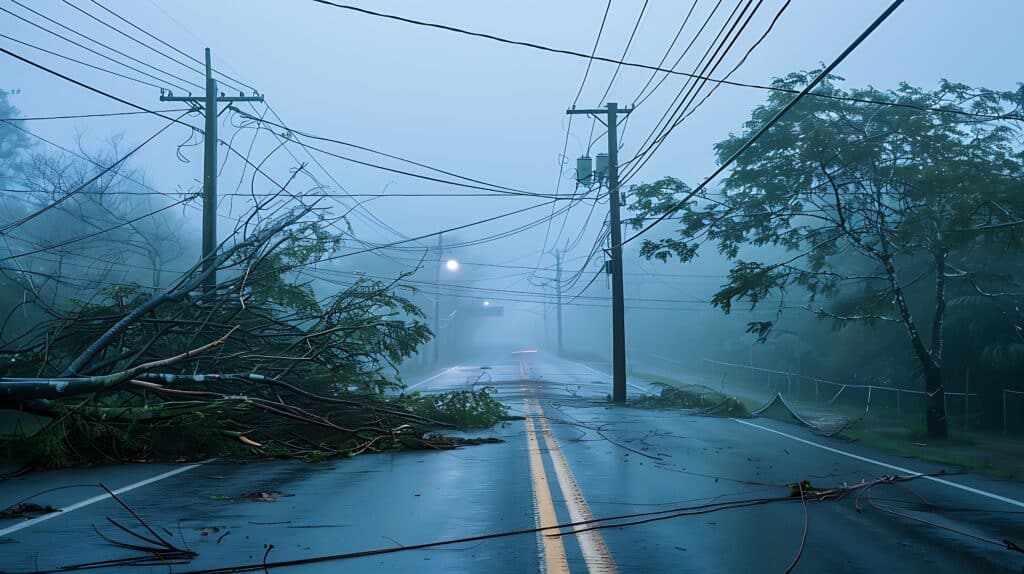

Storm response is where a utility’s true operating model gets revealed. On an ordinary day, disconnected systems are an inefficiency — annoying, costly, survivable. In the 72 hours after a major weather event, they become an emergency of their own, running right alongside the one in the field.
Consider what all-hands-on-deck requires: short-cycle service work, long-cycle maintenance, customer service, asset operations, construction crews, streetlight and infrastructure teams — everyone pivots to restoration at once. Mutual aid crews arrive from utilities two states away. Contractors get pulled in. And in a fragmented environment, every one of those groups lives in a different system, or in no system at all. Coordination falls back to phone calls, radio traffic, and spreadsheets — the channels most likely to fail or fall behind when the volume spikes. If the phones are down, so is the operating model.
The severe weather driving all this is increasing in frequency and intensity. Storm response is no longer an edge case to muddle through on adrenaline. Regulators score it, customers judge it, and boards ask about it.
The first hour — on one platform
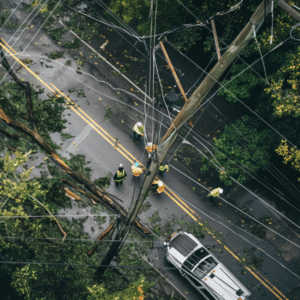 Now run the same emergency event through a utility where all work groups, work types, and assets live on a single platform. The pivot that used to take a day of reassignment and briefing happens in the system itself. Crews that normally do preventive maintenance are dispatched to restoration through the same interface they use every day — no emergency-only tools that nobody remembers how to use. A mutual aid crew from out of state gets appropriate access and sees the same asset information, the same work queue, the same map as the utility’s own people.
Everyone updating one system means everyone seeing one truth. Damage assessments flow in from the field and become dispatchable work without re-entry. Supervisors see restoration progress as it happens, not as of the last conference call. The estimated-restoration answer the call center gives a customer is drawn from the same live record the crews are updating — which is how utilities deliver the outage visibility customers now expect, the same real-time tracking they get from a delivery or a rideshare.
This is what KloudGin’s Single Face of Work® makes possible: construction, asset, and field service on one platform, across every work group and work type, so the emergency workforce is the everyday workforce with a different assignment. Utilities running connected operations have cut emergency response times significantly — not because their people move faster, but because the coordination overhead that used to consume the first hours of every event is gone.
Resilience is built on ordinary days
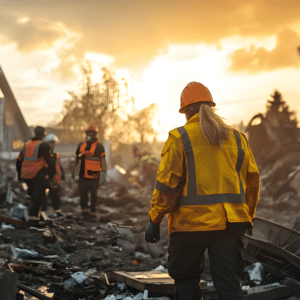 Emergency readiness can’t be built during the storm. The utilities that respond well are the ones whose everyday operating model already is the emergency operating model — same platform, same data, same habits, pointed at different work. The ones that struggle are discovering their seams in real time, with customers in the dark and regulators watching.
Restoration speed comes at a cost, and it’s usually paid in documentation. With the clock running, crews are judged on how fast service comes back, not on whether the record keeps up. Critical components get swapped in the field, and what’s installed and what’s on file drift apart — sometimes for good. A response that restores service on time can still leave the asset record wrong, and that error surfaces as the next crew’s problem months later.
That reframes the resilience conversation. Hardening the grid is essential, and it will take years and billions. Hardening the operating model — making sure that when the next event hits, every crew, contractor, and mutual aid partner can work from one current picture — is achievable now, and it pays for itself on ordinary days too. The same unification that coordinates a storm response is what removes the daily productivity drain of switching systems and reconciling data.
Storms and severe weather events are going to keep coming; that much is out of any utility’s hands. What’s in a utility’s hands is whether its systems respond as one organization or as a dozen departments finding each other by phone. When the wind picks up, that difference is measured in hours of restoration — and in whether the community’s trust survives the outage better than the infrastructure did.