

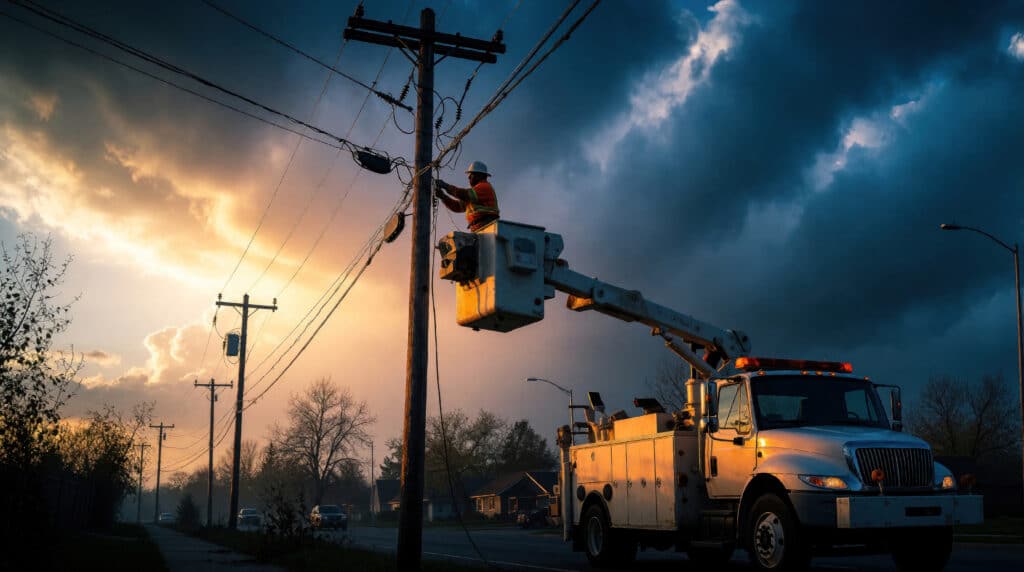

Ask a utility executive to name their number one challenge, and the answer is often some version of the same thing: our customers. Not because customers are unreasonable — but because the relationship is strained. Rates keep climbing. Ratepayers see the increases on every bill, and they don’t see what they’re getting for them. A customer waits months for a response on a solar interconnection, years for the project to move. Meanwhile the utility is delivering something critical, around the clock, and getting little credit for it.
This is the bind: the investment driving those rate increases is largely necessary — aging infrastructure, resilience, growth, regulatory commitments. What isn’t fixed is how much of every dollar reaches the outcome customers experience.
Where the money goes
The main cost in a utility sits in its operations. That’s where the workforce is, where the trucks roll, where the projects get delivered — and where the waste hides. Across the industry, utilities lose an estimated 20-30% of workforce capacity to system switching, data reconciliation, and rework across disconnected processes. A fifth to a third of the largest cost center, spent producing nothing a ratepayer would recognize as value.
Then a rate case lands in front of a commission. Every dollar requested has to be justified. Regulators and consumer advocates are asking, with increasing sharpness, whether the utility is running efficiently before asking customers for more. An operation where closing a single work order means bouncing between half a dozen screens, where project status takes weeks to assemble, where the same data is entered three times in three systems — that operation is carrying costs into the rate base that better-run work would never generate.
The most durable answer to ratepayer pressure is operational efficiency that shows up in the numbers, not a communications strategy: more work delivered per crew per day, capital projects that land where they were approved, fewer truck rolls for problems solved on the first visit.
The lever that moves both numbers
A unified operation — construction, asset, and field service on one platform, the way KloudGin’s Single Face of Work® runs — schedules work intelligently, sends crews out with full context, and resolves more problems on the first visit. Customers wait less. And the recovered time compounds: an average of 30 minutes returned to every worker every day adds up, across a full workforce, to capacity that delivers more work without more headcount — the math a rate case needs.
The experience gap closes too. Customers now expect real-time visibility from every service they pay for — during an outage, on a service appointment, on the interconnection request that used to disappear into a queue. That expectation can only be met when the underlying operation runs on current, connected information. A utility can’t show customers a real-time status its own teams don’t have.
Value the commission can see, value the customer can feel
The utilities in the strongest position over the next decade will be the ones that can stand in front of two audiences with the same story. To the commission: the waste has been wrung out of operations, and here is the evidence — productivity per worker, project delivery against budget, resolution times. To the customer: service is more reliable, questions get answered faster, and there’s real visibility when something goes wrong.
Rates may still rise; the infrastructure ahead demands investment. But there’s a difference customers can feel between paying more for an operation that visibly works and paying more into a black box. KloudGin’s role is to help utilities be the first kind — where the operational engine is efficient enough that every rate dollar has to do less apologizing.